FAA ground stop delayed 10,000 flights in legacy network failure
The FAA's nationwide ground stop delayed at least 10,000 flights and disrupted 2 million passengers. Duffy blamed overloaded legacy routers, pointed to L3Harris, and asked Congress for $50 billion.
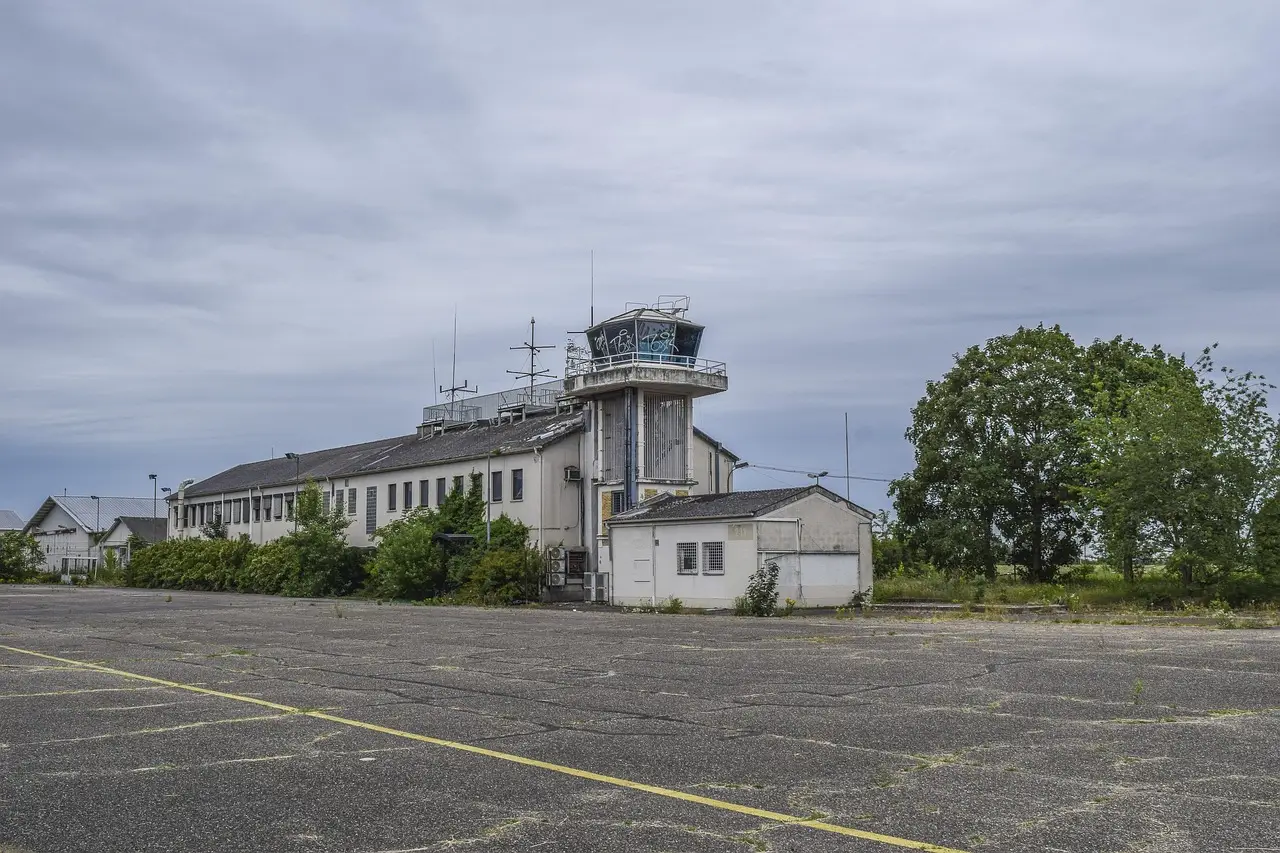
At least 10,000 flights were delayed and more than 2 million passengers disrupted on Friday when the Federal Aviation Administration imposed a nationwide ground stop across all U.S. airports, an order that lasted more than four hours and lifted around 9 p.m. EST.
The FAA invoked “extraordinary circumstances and for reasons of safety,” the language of a safety-of-flight order rather than a routine traffic-management restriction. Intermittent radar and communications failures meant air traffic controllers could not always reach pilots or confirm where aircraft were.
What did the White House briefing establish?
Transportation Secretary Sean Duffy and Homeland Security Secretary Markwayne Mullin briefed reporters after the stop lifted, attributing the disruption to aging infrastructure rather than an outside attack.
Duffy, returning to Washington, D.C., from Dallas after speaking with college students at Texas Christian University when the FAA began reporting radar and communications instabilities, said: “This is a legacy system problem that took place tonight, and we have to handle it accordingly.”
He described the mechanism: “Our switches, our routers, actually got overloaded with data, and they went down. And I shouldn't say they went down. They started to give us inconsistency in the data from those routers. And because of that, we shut the system down.”
Mullin said the order was issued “out of an abundance of caution” and that no flights or lives were at risk. He linked it to FAA patches and newly installed technology “overwhelming the older system.”
The cyber question received a qualified answer. Mullin said it “does not appear” the issues were caused by a cyberattack, and said investigators found no evidence or “footprints” of anyone improperly accessing or hacking FAA systems.
He then narrowed that finding: “However, we're still looking, so we're not going to rule that out.” Mullin separately stated the FAA's failures were unequivocally unrelated to the global Microsoft outages earlier in the week.
Mullin said these agencies worked together Friday to investigate and address the issues:
- National Security Agency
- Defense Department
- Cybersecurity and Infrastructure Security Agency (CISA)
- Federal Emergency Management Agency (FEMA)
- Other federal agencies
What did the Saturday briefing add about cause?
At a Saturday press conference, Duffy said a technical issue may have arisen during work on telecommunications lines performed by L3Harris Technologies, the Florida-based defense contractor that has worked for the FAA for over 20 years.
Duffy said L3Harris owns the network the FAA uses to control the airspace. He described routine maintenance at “at least one of our remote FAA locations,” where a contractor was switching telecommunications lines from old copper wire to fiber.
An FAA router on site “was apparently flooded with data,” Duffy said, quickly impacting additional routers across FAA systems across the country.
The fault remains open. Duffy framed the questions: “What we're working to determine was whether we had incompetence — meaning was it user error or installation error from L3Harris — or did they install a faulty router? We haven't determined what the fault was. Was it the router? Or were they not doing great work for us at L3Harris.”
L3Harris, in a statement, said it “is supporting the FAA in its investigation to understand the conditions that led to the Nov. 13 ground stop of our nation's air travel.”
The company said it has “completed more than 70% of the planned airspace communications conversion from legacy copper wires to a fiber optic system,” working with the FAA and its telco partners, and that it “takes the nationwide ground stop and its impact on travelers, airlines and air traffic operations seriously.”
What does this change for agencies running legacy infrastructure?
Three things, and none of them a finding of fault:
- Legacy infrastructure now carries a safety-of-flight label in the administration's own words, which is the premise of the funding request.
- The gap is quantified: $12.5 billion appropriated in 2025 against a $50 billion emergency request.
- Contractor performance remains live, because no determination has been made.
Duffy called on Congress to pass an emergency funding bill giving the Transportation Department another $50 billion to modernize the nation's air traffic control system. Congress appropriated $12.5 billion in 2025 through the One Big Beautiful Bill Act to begin that work.
“I got 12 and a half billion, and with that money, we are spending it and spending it well, but the Congress at the time knew that that was not going to be enough,” Duffy said.
He added: “What went down was old, right? It was … old legacy equipment. It failed, and listen, it's going to continue to fail.”
Duffy said new artificial intelligence (AI) systems deployed in recent weeks had nothing to do with the ground stop, and that systems recently upgraded from analog to digital “did not experience these issues.”
The FAA plans prioritized larger flights into the weekend. Duffy expected delays to compound for several days, and said flight schedules should return to track before the Thanksgiving rush.
The determination of fault is still open. The funding request is not.
Original: x.com
Olivia Hart
Show full bio
Senior reporter covering technology and product news in Civil Service News is the daily trade press at Civil Service News.