DHS Calls Industry After Microsoft, FAA and NSA Outages
Federal officials found no coordinated cyber campaign behind recent outages, but Microsoft 365, FAA and NSA failures exposed questions about patching, aging systems and software safety data.
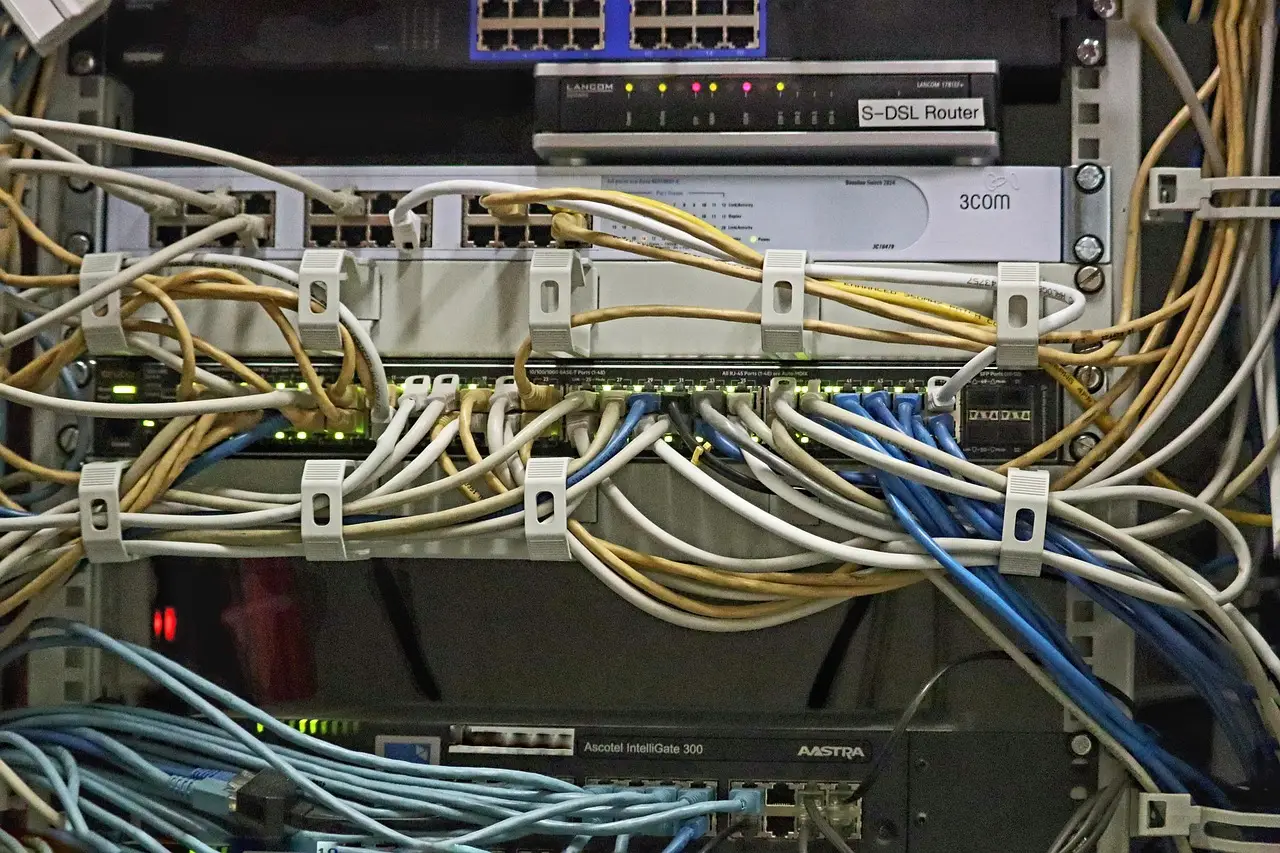
A nearly daylong Microsoft 365 outage, a nationwide Federal Aviation Administration (FAA) ground stop and an outage on a classified National Security Agency (NSA) communications network formed the backdrop for a House Homeland Security Committee hearing Wednesday. Officials said they had found no evidence that the incidents formed a coordinated cyber campaign.
What did the hearing establish?
Director of National Intelligence Jay Clayton described the outages as several unrelated issues that had recently caused service disruptions. He acknowledged that the timing could raise questions, then told lawmakers:
“But based on what we know today, after a great deal of diligence, these are separate service outages associated with maintenance and technical changes. They are not a coordinated or state-sponsored attack.”
Government leaders said most disruptions resulted from routine upgrades, maintenance or technical changes. Their finding rests on current diagnostics, not proof about every incident.
Department of Homeland Security (DHS) Secretary Markwayne Mullin said he was 98 percent confident the events did not involve adversaries hacking government systems. DHS will convene an industry call on preventing similar outages.
Mullin said vendors could give customers more advance notice before upgrades, while stressing that DHS was not pressuring the industry. He identified patching and aging infrastructure as part of the problem and said online uncertainty can produce fear.
Some outages were linked to rapid software patching for artificial intelligence (AI)-driven vulnerabilities. Clayton said such work can take systems down before they return, and that the pace of patching and upgrading continues to increase.
What failed during the outages?
- The Microsoft 365 failure lasted nearly a day and followed a hidden defect in the company’s cloud gateway.
- The Saturday FAA incident produced a nationwide ground stop after a telecommunications network failure linked to a router upgrade.
- Routine maintenance took down a classified NSA communications network.
The separate causes did not establish a shared attacker or platform. They did show how maintenance, defective code and network changes can interrupt essential services.
Why do the outages raise broader software-safety questions?
The private sector owns and operates most U.S. critical infrastructure, according to Anjana Rajan, chief executive officer of Atalanta and a former White House cyber official. She said software-defined systems increasingly determine behavior under normal, abnormal and hostile conditions, but understanding has not kept pace.
Rajan summarized the consequence: “They’re stuck on the tarmac. Their credit card’s not working. Their email is out.”
Lauren Zabierek, chief executive officer and co-founder of the Software Safety Institute and a former Cybersecurity and Infrastructure Security Agency (CISA) official, said software need not be hacked to cause harm.
She said security and quality describe product properties, while safety concerns outcomes for people who depend on the product. National security, the economy, and public health and safety depend on software, yet too much of it ships with unsafe components, practices and defaults.
Zabierek and former CISA colleague Bob Lord, now the institute’s chief strategy officer, co-founded it to address vendors shipping products with known defects and vulnerabilities. Its work builds on CISA’s Secure by Design initiative.
Lord said the software sector lacks the safety and security data found elsewhere. Without complete information and institutions to supply it, people connect the dots themselves, while vendors can withhold important safety information from customers and the public.
What institutional changes are under discussion?
Zabierek said Mullin could reconstitute the Cybersecurity and Infrastructure Security Agency’s Cybersecurity Advisory Committee and the DHS Cyber Safety Review Board. The latter investigated major cyber incidents before it was disbanded last year.
Lawmakers on the House Homeland Security Committee introduced a bipartisan bill Tuesday that would reconstitute the board under a new name. The source describes a proposal, not completed reconstitution.
Zabierek also said CISA needs authority to set standards for technology manufacturers and hold them accountable. Neither that authority nor a restored board appears among the immediate announcements.
Rajan pointed to a January 2025 report co-authored by CISA and other agencies on “closing the software understanding gap.” It calls for government action because investment in new software has outpaced verification efforts for functionality, safety and security. She said providers need software-understanding capabilities, not only cybersecurity capabilities.
Lord urged the DHS secretary to strengthen the Common Vulnerabilities and Exposures (CVE) program, which catalogs publicly disclosed vulnerabilities with standard identifiers. Participation remains voluntary. He said no other sector he knows permits a U.S. commercial company to withhold important safety information from customers and the public.
AI accelerates the discovery of software flaws, Lord said, but faster patching will not remove products containing years- or decades-old memory-safety vulnerabilities. His priority is reducing recurring classes of coding error, not asking defenders to patch harder. The source provides no reform timetable.
What does this change for agency managers?
The announced response includes no reporting deadline, vendor mandate or agency standard. The immediate action is a DHS-industry call and a request for advance notice of upgrades; formal standards, board reconstitution and broader disclosure rules would require additional action.
For agency managers, the practical distinction is operational: an ordinary maintenance failure can produce the same disruption as an attack. The absence of evidence of a coordinated campaign does not make the resulting service failures immaterial.
The source gives no call date, and current official confidence does not equal sector-wide transparency.
The outages exposed failure modes that do not require an adversary.
Source: Federal News Network
Olivia Hart
Show full bio
Senior reporter covering technology and product news in Civil Service News is the daily trade press at Civil Service News.