CDC Chief Tries to Steady Workforce After U.S. Loses Measles Elimination Status
The Pan American Health Organization revoked the U.S. measles-elimination status on Nov. 17 after 26 years. CDC Director Dr. Erica Schwartz told staff the work ahead still matters.
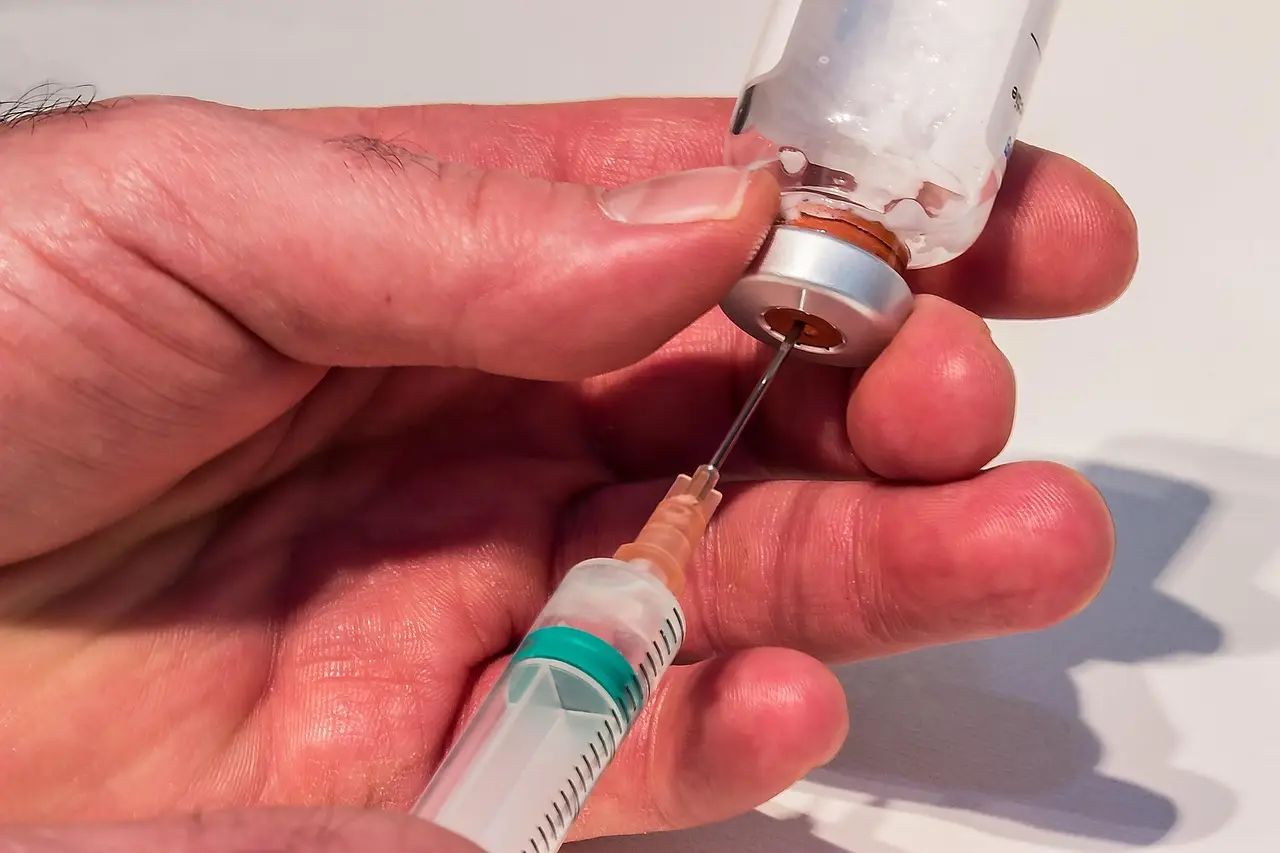
The United States lost its measles-elimination status on Nov. 17, and the news landed first inside the Centers for Disease Control and Prevention, where Director Dr. Erica Schwartz spent the day trying to hold her workforce together.
The Pan American Health Organization, a branch of the World Health Organization, revoked the designation that had stood for 26 years. The country is now experiencing its largest measles resurgence since 1991.
For career staff at CDC — the epidemiologists, laboratorians and outbreak responders who spent those 26 years building the elimination record — Schwartz reached for an internal email, later obtained by Government Executive.
What did the director tell employees?
"This news may be especially difficult for those of you who have dedicated years of your career to preventing measles and responding to outbreaks across the country," Schwartz wrote.
She followed with a line aimed squarely at the careerist's instinct that a lost designation means lost work. "This development does not diminish the work you have done or change the importance of the work ahead," she wrote.
Schwartz told staff the elimination designation itself carries no protective power. "Vaccination does," she added. "Our focus remains on stopping outbreaks, preventing illness, and supporting the communities and public health partners who depend on our expertise."
She framed the agency's core functions — surveillance, laboratory science, outbreak response, communications, and prevention — as still "essential," and singled out the teams actively working the measles response. "As we move forward, I will continue to rely on your knowledge, experience, and commitment to guide our efforts," she wrote. "I know this has been a challenging time for many across the agency. I want you to know that I value your work and remain committed to ensuring CDC has the tools, resources, and support needed to carry out our mission."
How bad is morale at the agency?
By Schwartz's own accounting, grim. She has conceded that employee morale sits at an "all-time low" as the agency rebuilds trust with both its workforce and a skeptical public.
Since taking office, she has been filling vacancies in CDC's leadership ranks and telling employees that a hiring plan to mitigate deep staffing cuts is coming into focus.
Public sentiment tells its own story. Polling for most federal agencies has generally improved since last year, but recent data from the Pew Research Center and Gallup show fewer Americans think CDC is doing a good job.
Not every employee found the email persuasive. "To me and my team, the email rings hollow," one CDC employee told Government Executive. "A driving force for low vaccination rates has been disinformation from RFK, and she's unwilling to publicly challenge what he says."
What is HHS doing about the status?
Health and Human Services Secretary Robert F. Kennedy Jr. posted on X that the department will "work to regain U.S. measles elimination status." He wrote that CDC has worked alongside state teams in Texas, South Carolina, Virginia, Kansas, New Mexico, and Wisconsin to bring outbreaks under control, and is supporting Pennsylvania and New York with epidemiologists and other health experts.
"We are working to close vaccination gaps and rebuild public trust. We will answer families' questions honestly about vaccine benefits and risks and work with trusted health care providers and community leaders to prevent measles, limit its spread, and support timely treatment," Kennedy wrote on Nov. 17.
The relationship between the secretary and his CDC director is not friction-free. Schwartz has said the two agree the measles-mumps-rubella (MMR) vaccine "is the number-one way to prevent measles" — but on other public health matters, she said, "I disagree all the time" with Kennedy.
The tension has a precedent. Former CDC Director Dr. Susan Monarez told a Senate panel in September 2025 she was fired for resisting Kennedy's orders regarding vaccines, as HHS has pursued a vaccine-skeptical agenda under his leadership.
What role does CDC see for itself on the ground?
Schwartz has sketched a supporting role for the agency, with states in the lead. CDC, she said, should work with state agencies on outreach into communities experiencing measles outbreaks.
"The CDC is certainly there to provide resources to the states and provide support to the states. But what's most important is that the states know these communities very well. And what we're trying to do is lean in with the states to say, 'How can we help you reach those communities and be the trusted agents,' because they're the trusted agents for these communities. Having big CDC come in and say 'Verily, thou shalt,' is not going to work," she said during a fireside chat at the Milken Institute Future of Health Summit last week.
For civil servants inside the agency, the stakes are simpler than the org-chart politics: an elimination status built over 26 years is gone, the largest resurgence since 1991 is underway, and the director is asking them to keep working anyway.
Original: cdc.gov
Tom Whitfield
Show full bio
Correspondent covering regulation, policy and their impact on Civil Service News is the daily trade press at Civil Service News.