House Democrats Ask DHS Watchdog to Probe $7.5B Big Bend Wall Contracts
Rep. Veronica Escobar and 22 House Democrats want DHS Inspector General Joseph Cuffari to examine whether politics shaped five Big Bend wall awards worth about $7.5 billion. Construction starts Nov. 23.

Five border barrier contracts worth roughly $7.5 billion across West Texas are now before the Homeland Security inspector general by request. Rep. Veronica Escobar, D-Texas, and 22 other House Democrats wrote to Inspector General Joseph Cuffari on Nov. 16, asking whether political ties rather than border need determined who won the work. The Department of Homeland Security dismissed the request as politics, and construction — cleared by the Supreme Court on Nov. 9 — is moving ahead.
The timing gives the letter its edge. The justices lifted a district court order that had frozen the project on Nov. 9, so money starts moving just as the questions arrive. KXAN reported that Hillary Pierce of the group Conserve Big Bend said a contractor told a Hudspeth County landowner work on her property would begin Nov. 23.
What does the letter ask?
The letter poses seven questions. The core ones:
- Whether political contacts or campaign contributions influenced contractor selection.
- Whether the awards were competed.
- Whether DHS weighed need and cost before committing billions in a low-traffic area.
- Whether legal waivers weakened safeguards against waste and fraud.
The letter sets a Nov. 27 deadline for a written reply and an investigation timeline.
The signers are careful about what they allege. The letter states its facts "do not by themselves establish that contracts were improperly awarded." Its case rests on connections it attributes to public reporting. It says Barnard Construction chairman Tim Barnard and his wife gave about $1 million to a Trump campaign fundraising committee in the 2024 cycle; KXAN, citing Federal Election Commission filings, put Barnard's giving to the Trump 47 Committee at no less than $600,000. The letter also recalls that Fisher Sand & Gravel's $400 million first-term wall contract drew a Defense Department inspector general review.
The five awards at issue
| Contract | Contractor | Amount | Area |
|---|---|---|---|
| BB1 | Barnard Construction | $1.0 billion | Big Bend Sector |
| BB2 | Fisher Sand & Gravel | $1.2 billion | Big Bend Sector |
| BB3 | Barnard Construction | $960.4 million | Big Bend Sector |
| BB4 | Southwest Valley Constructors | $1.7 billion | Work associated with Big Bend National Park |
| BB5 | Fisher Sand & Gravel | $2.6 billion | Lower Canyons, downstream of the park |
Same low numbers, opposite conclusions
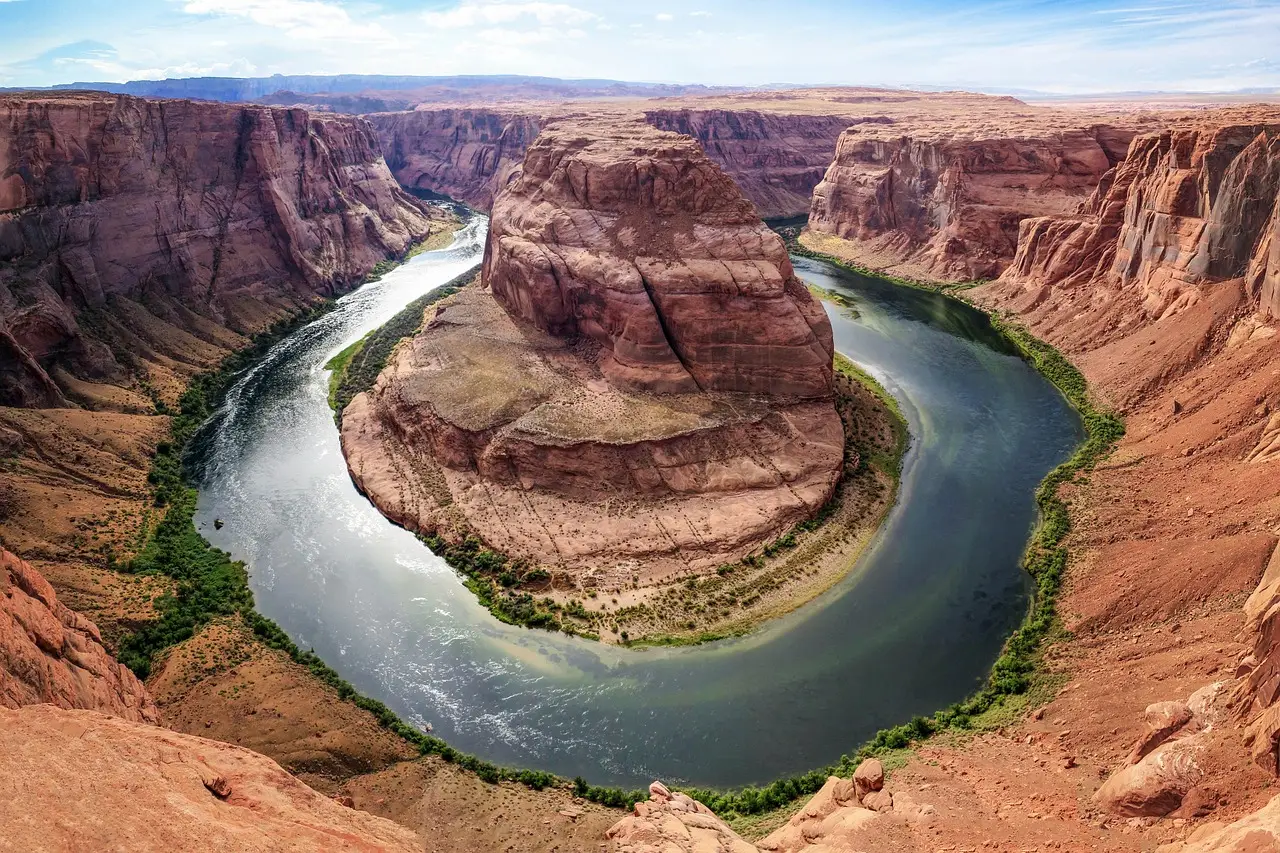
The need question turns on traffic. According to the letter, the Big Bend Sector covers 26 percent of the southern border but accounted for less than 1 percent of apprehensions over the five years DHS used to justify the project. Big Bend National Park covers about 6 percent of the border and accounted for 0.016 percent. KXAN, citing U.S. Customs and Border Protection data, reported 117 land encounters in the Big Bend region in October, against 1,396 in the El Paso Sector and 763 in Del Rio.
The administration reads the same quiet border as proof its approach works. CBP told KFOX14 that the Border Patrol recorded fewer than 99,000 southwest border apprehensions in fiscal 2026 and the lowest annual nationwide encounters in agency history, in line with record-low October totals CBP released this week. DHS General Counsel James Percival was blunter. "It is unfortunate that Democrats are more interested in political shenanigans than in governing," he said in a statement reported by KXAN and KFOX14, adding the department is "well prepared to deal with this nonsense."
Can a waiver answer the competition question?
The sharpest legal wrinkle is the waiver itself. Section 102 of the Illegal Immigration Reform and Immigrant Responsibility Act of 1996 lets the Homeland Security secretary set aside any legal requirement the secretary deems necessary to build barriers quickly. According to the letter, then-Secretary Kristi Noem's Oct. 15, 2025, waiver reached "all contracting actions" for barriers and roads in the sector.
If procurement rules that normally require competition were lawfully waived, the letter's competition question may get a simple answer: they did not apply. That shifts the weight to questions a waiver cannot easily erase — whether decisions were documented, whether anyone with political ties tried to steer them, and how far the waiver reaches into ethics and appropriations law. The pending court challenge to the Big Bend waivers tests their reach under the major questions doctrine, not the contracting side.
What happens next
Inspectors general set their own workloads, and a letter from House minority members does not compel an investigation. The pressure point comes later: if Democrats control a chamber when the new Congress convenes in January, the same seven questions can return with subpoena power behind them, alongside the still-unfinished fight over fiscal 2027 Homeland Security funding.
Two dates to track:
- Nov. 23: reported start of construction on a Hudspeth County property, per KXAN's account of a local group's claim.
- Nov. 27: the response date the letter sets for the inspector general.
Source: Google News · Government Ethics & Oversight
Elena Vasquez
Show full bio
Staff writer covering companies, deals and strategy in Civil Service News is the daily trade press at Civil Service News.