Bexar County Approves $31 Million Axon Contract Amid $145 Million Deficit
Bexar County commissioners voted 4-1 on Nov. 17 to approve a $31 million, five-year Axon contract covering 953 body cameras and 1,102 Tasers, despite a $145 million projected deficit.
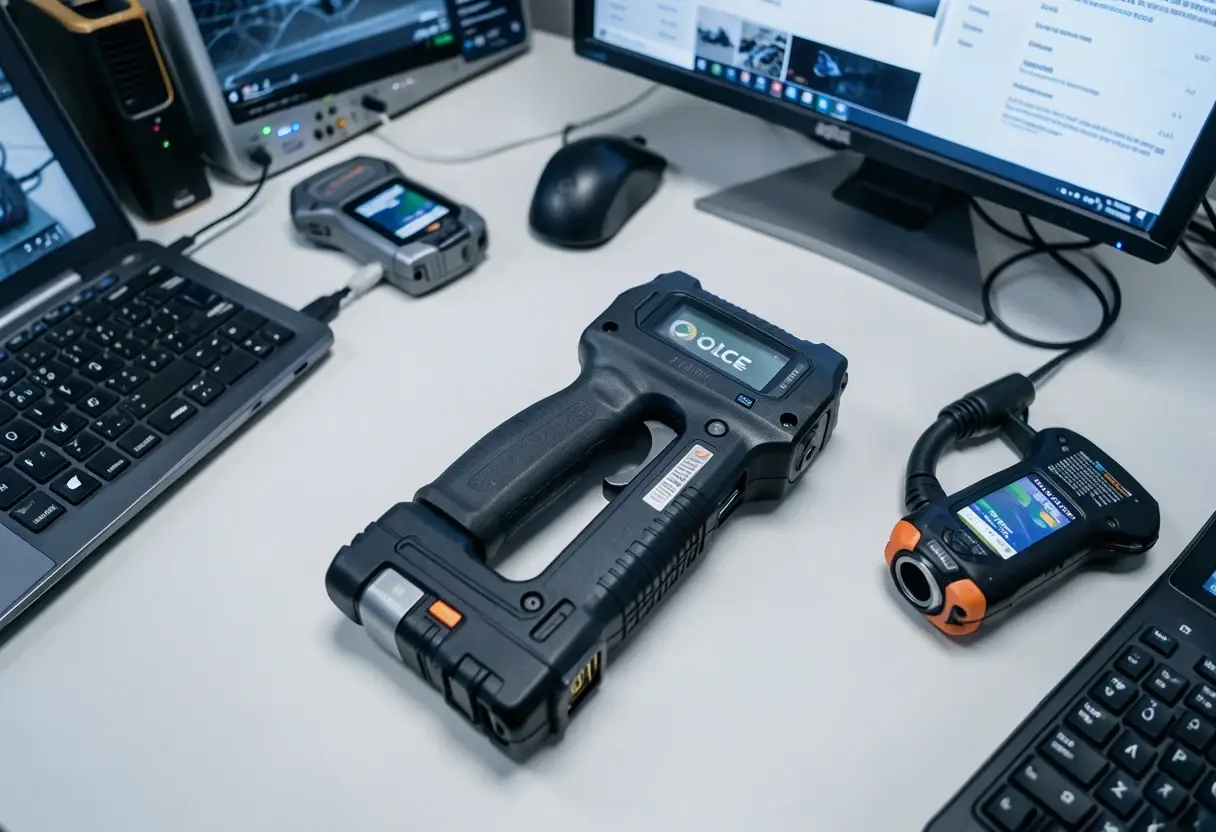
Bexar County, Texas, will pay Axon Enterprise Inc. $31 million over five years — more than tripling its 2022 contract — despite a projected $145 million budget deficit. Commissioners voted 4-1 on Nov. 17 to approve the agreement, which runs through January 2032 at roughly $6.2 million annually.
County Judge Peter Sakai and Commissioners Rebeca Clay-Flores, Justin Rodriguez and Grant Moody voted yes. Commissioner Tommy Calvert dissented, citing the county's strained finances. Commissioners had already tapped $68 million in reserves to balance the $2.6 billion 2027 budget adopted in September.
What does the contract cover?
The agreement covers 953 body cameras, 1,102 Tasers and 367 in-car cameras, plus updated software. The Bexar County Sheriff's Office, the Fire Marshal's Office and all four constables' offices will use the equipment.
The county's spending on Axon technology has climbed steadily. The 2022 contract cost $9 million — about $3 million more than the initial 2019 agreement. The new $31 million deal marks the largest increase yet.
Deputy County Manager Thomas Guevara, who negotiated the contract, said two factors drove the steeper price: more law enforcement personnel using the technology — the deal adds 158 sheriff's deputies and 57 constable deputies — and inflation. Body camera costs have risen 50% since 2021, and Taser prices jumped from about $70 to $124 per unit.
Why did the majority back it?
Sakai framed the vote around service quality and workforce integrity. "Public safety is not cheap, and we must maintain the highest quality of services," he said. "This is about maintaining the integrity and character of the sheriff's workforce and deputies."
Sheriff Javier Salazar pointed to the cross-device integration as the core value. When an officer draws a Taser, their body camera — and those of nearby officers — switches on automatically.
"That kind of technology exists for a reason, and that reason is accountability and safety," Salazar said.
Salazar cited a 2020 incident in which a deputy shot and killed Damien Daniels, a veteran experiencing a mental health crisis. The deputy's older-model body camera briefly shut off, leaving about 10 seconds without footage. A newly graduated deputy at the scene carried newer equipment: when she deployed her Taser, her camera and several others activated automatically, capturing the gap in the first recording.
"I can't imagine how things would've been perceived if a camera had just magically turned off in the middle of a crucial incident," Salazar said. "It's super important that the public knows the documentation exists, and that we're able to show our side of our story."
What did the county cut to control costs?
Guevara said the negotiating team trimmed the initial request, which included 300 additional cameras, by reassessing needs and removing equipment for potential future users. That avoided upfront costs for gear the county may not need.
"Our main focus was on not losing any functionality, and being transparent and accountable to the public," Guevara said. "We really pushed staff to put in the necessary research to make sure we were getting products with known benefits."
Salazar also gave up a pilot of two artificial intelligence features his office wanted: a body camera function that translates more than 60 languages and a component that automatically transcribes footage into an incident report.
"Those features would've been nice to have, and they would've been convenient and saved us time," Salazar said. "But in this financial situation, we needed to be realistic. We didn't get everything we wanted, but we got just what we needed."
What did the dissent say?
Calvert argued the county should extend the life of usable equipment rather than upgrade during a deficit. "This is simply about the fact we're in a budget deficit," he said. "If these body cameras are still usable, we should be stretching them longer."
The vote puts Bexar County's total Axon commitment above $40 million across three contracts since 2019.
Original: tribunecontentagency.com
James Calloway
Show full bio
News editor covering money, funding and market shifts around Civil Service News is the daily trade press at Civil Service News.